


Table of Contents[Hide][Show]
- Why Removing Decor First Makes Such a Difference
- The Most Important Rule: Do Not Bring Out Fall Decor Yet
- Step One: Remove Expired Summer Decor
- Step Two: Notice the Tired Everyday Accessories
- Step Three: Empty One Surface Completely
- Step Four: Clean Before You Restyle
- Step Five: Return the Room’s Everyday Foundation
- The “One In, One Out” Seasonal Rule
- Why Less Decor Often Looks More Intentional
- Store Summer Decor With the Next Transition in Mind
- Give Your Home a Moment to Breathe
- Fall Declutter Checklist
Fall decorating often begins the same way: we bring in a storage bin filled with pumpkins, leaves, signs, candles, and cozy textiles—and start placing them wherever we can find room.
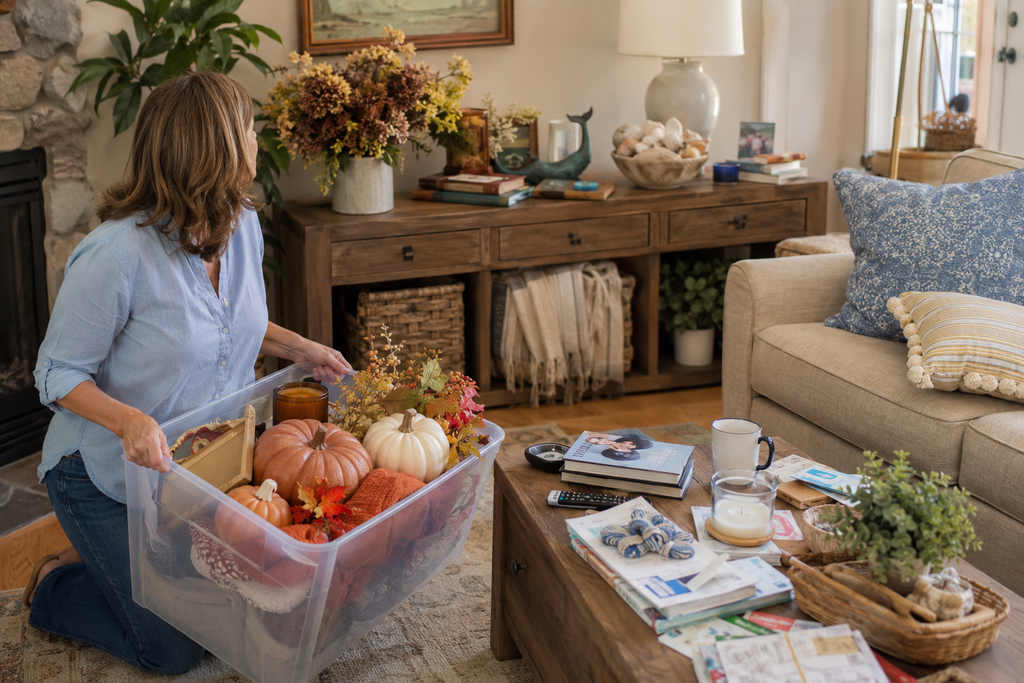
But if the surfaces are already holding summer decor, tired everyday accessories, unopened mail, and items that slowly wandered in from other rooms, the fall decorations rarely look the way we imagined.
Instead of feeling warm and inviting, the room feels crowded.
The solution is not necessarily better fall decor or more fall decor.
It is removing something first.
A pre-fall decor declutter creates breathing room before the next season enters your home. It gives you a chance to put summer away properly, reconsider accessories that no longer serve the room, clean areas that are difficult to reach once decorated, and decide what you truly want to display.
When you begin with a clear surface, every fall piece looks more intentional. A single branch in a pottery vase becomes noticeable. A beautiful pumpkin can stand on its own. A framed printable has enough space to be enjoyed. The room feels decorated rather than filled.
Before you bring out a single fall bin, let’s clear the stage.
Why Removing Decor First Makes Such a Difference
Our eyes become accustomed to the objects around us. A stack of magazines, a fading summer floral arrangement, an extra candle, and three small signs may no longer register as clutter because we see them every day.
Then we add fall decorations around them.
The result is visual competition. Nothing becomes the focal point because everything is asking to be noticed at once.
Removing decor first helps you:
See the room with fresh eyes
Notice which surfaces are carrying too much
Clean areas that have been covered for months
Identify damaged or tired accessories
Make room for seasonal focal points
Use fewer fall decorations more effectively
Avoid buying items similar to what you already own
Store summer decor carefully instead of tossing it into a bin
Create a calmer transition into the new season
Decluttering is not a punishment before decorating. It is part of decorating.
The Most Important Rule: Do Not Bring Out Fall Decor Yet
Keep the fall bins closed until the summer and everyday layers have been evaluated.
If pumpkins are already sitting in the room, you will begin designing around them instead of honestly deciding what needs to leave. It also becomes easy to move summer pieces straight into fall storage because you are eager to get to the fun part.
Complete these four steps first:
- Remove the current decor.
- Sort what you removed.
- Clean the empty surface.
- Return only the everyday essentials that belong there.
Once those steps are complete, you can bring in fall intentionally.
Gather Five Baskets, Boxes, or Bags
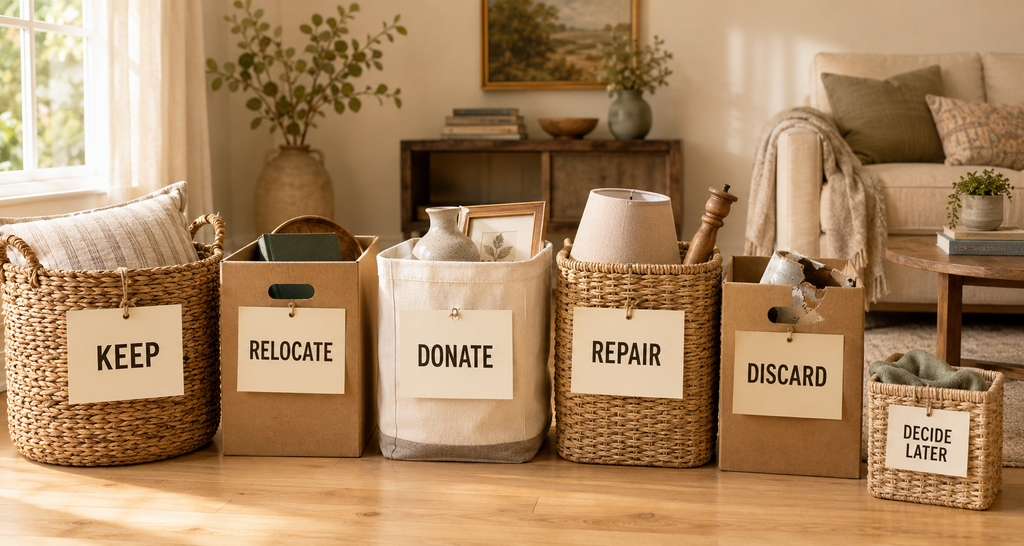
Before beginning, create five clearly labeled categories:
Keep
These are pieces you still love, use, or plan to display during the next season. “Keep” does not always mean “put back immediately.” Some items may go into seasonal storage or wait until the room is restyled.
Relocate
These items are useful or meaningful but belong somewhere else. A book returns to the bedroom. A serving piece goes back to the kitchen. Craft supplies return to the craft area. Relocating is not the same as hiding clutter in another room, so give every item a specific destination.
Donate
These items are clean, usable, and in good enough condition for someone else to enjoy, but you no longer want or need them. Include decor that no longer reflects your style, duplicates, and pieces you repeatedly choose not to display.
Repair
These are items worth keeping only if they are repaired, cleaned, touched up, or completed. Give the repair box a deadline. If you do not fix the item before the next seasonal transition, reconsider whether it deserves storage space.
Discard
These items are broken, stained, unsafe, badly faded, or too damaged to donate or repair. Dispose of them responsibly according to the materials and local options available.
You may also want a sixth temporary container labeled Decide Later, but keep it small. It should prevent one difficult object from stopping your progress—not become permanent storage for every uncertain decision.
Step One: Remove Expired Summer Decor
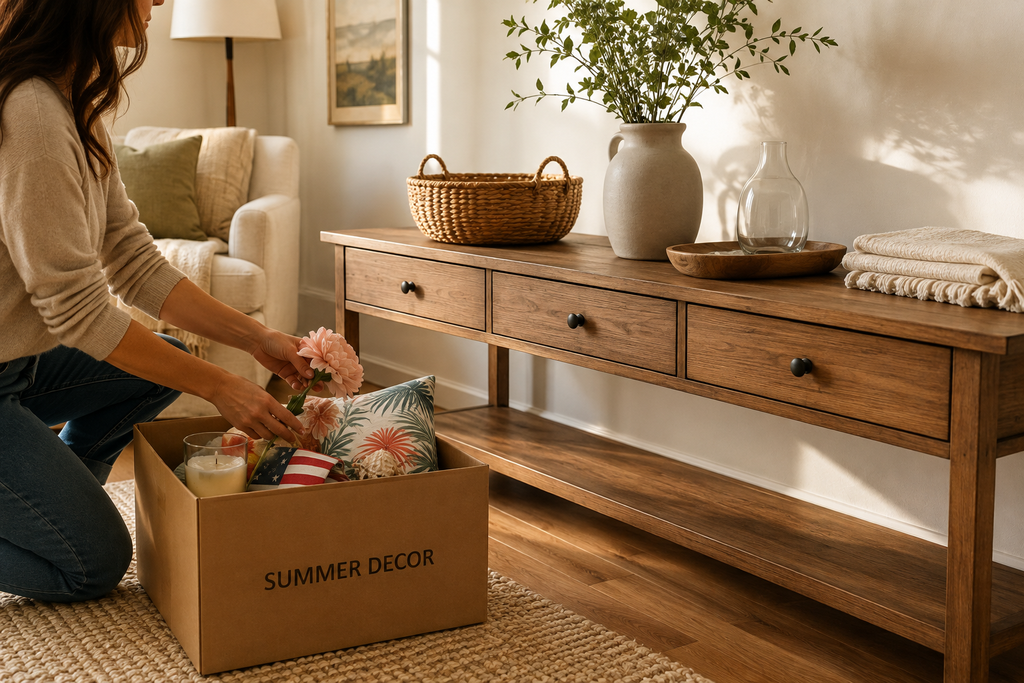
“Expired” summer decor does not necessarily mean old. It means the item no longer contributes to the room as it enters a new season.
Look for:
- Faded or dusty faux flowers
- Seashells or coastal accents that feel out of place
- Bright tropical prints
- Red, white, and blue holiday decorations
- Lightweight summer throws and pillows you no longer want displayed
- Worn outdoor cushions
- Dried natural arrangements that have begun shedding
- Candles with only a small amount of wax remaining
- Seasonal signs you are ready to put away
- Empty planters or neglected summer arrangements
- Decor tied to a summer activity that has ended
Some summer items can transition into early fall. Baskets, neutral pottery, green plants, glass vases, wooden trays, and cream textiles may work beautifully year-round.
The question is not simply, “Is this summer decor?” Ask instead:
Does this help create the feeling I want for the next season?
If the answer is no, remove it.
Step Two: Notice the Tired Everyday Accessories
Seasonal transitions reveal more than out-of-season decor. They also help us notice everyday accessories that have faded into the background.

Look carefully at:
- Decorative objects you no longer enjoy
- Too many small signs or figurines
- Empty candleholders
- Stacks of books no one opens
- Picture frames with outdated or faded photographs
- Trays filled with miscellaneous objects
- Baskets that have become clutter catchers
- Pillows that are flat, stained, or uncomfortable
- Faux greenery that looks dusty or artificial
- Items left in a room simply because they have nowhere else to go
- Multiple pieces that serve the same visual purpose
Everyday accessories do not have to leave permanently. Some may only need cleaning, new placement, or a break in storage.
Removing an item for one season can also help you appreciate it again later.
Step Three: Empty One Surface Completely
Choose a single surface rather than trying to declutter the entire home at once.
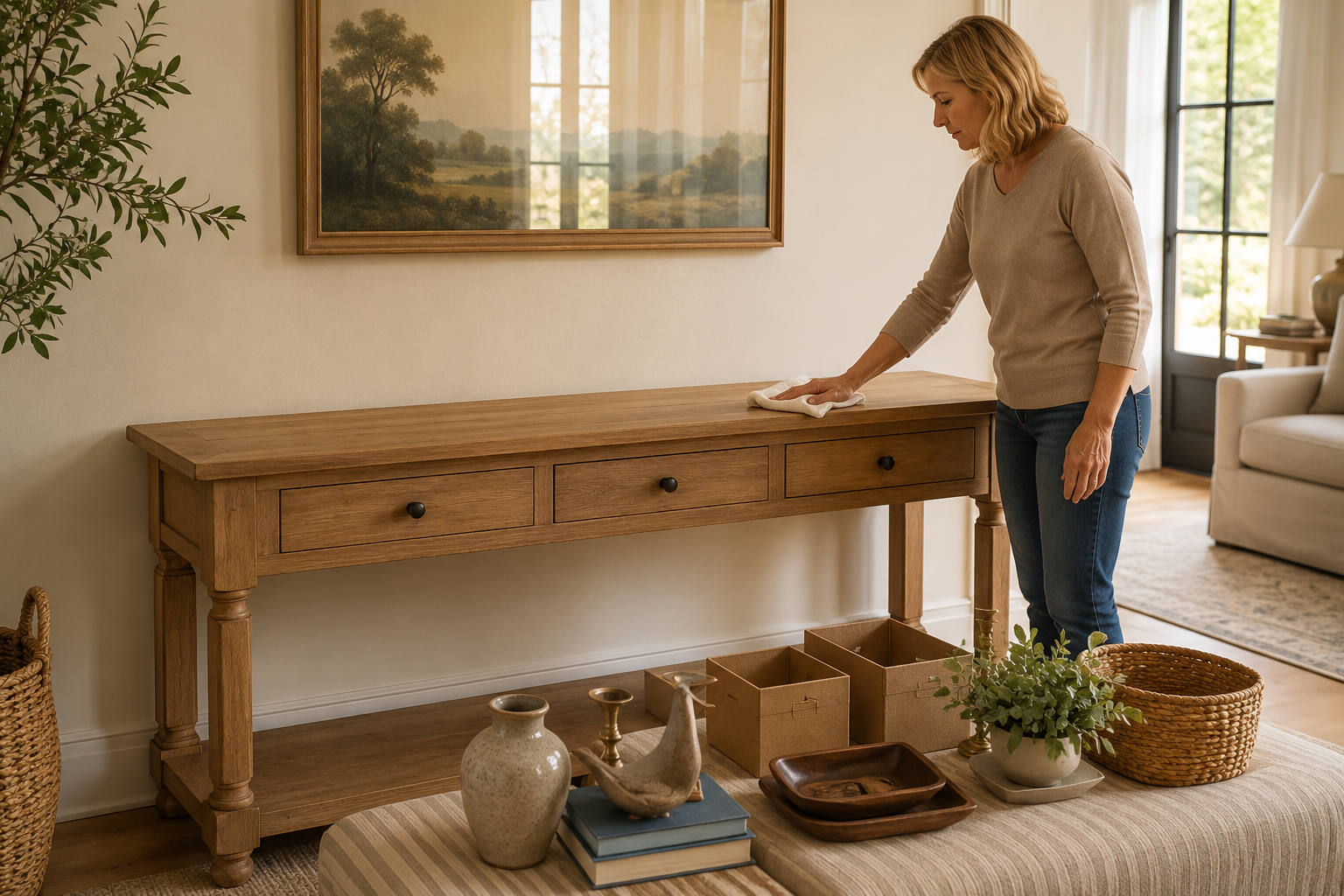
Good starting points include:
- The entryway table
- Fireplace mantel
- Coffee table
- Kitchen island
- Dining table or buffet
- Open shelving
- Bathroom counter
- Nightstand
- Front porch table or bench
Take everything off—even items you are fairly certain will return.
This matters because editing around objects encourages us to preserve the existing arrangement. An empty surface allows you to reconsider its purpose, balance, and visual weight.
Place the removed objects together and ask:
- Does this item belong on this surface?
- Is it useful, beautiful, or meaningful?
- Would I choose to place it here today?
- Does it compete with something else?
- Does it make cleaning more difficult?
- Am I keeping it because I love it or because I am accustomed to it?
Then sort each piece into keep, relocate, donate, repair, or discard.
Step Four: Clean Before You Restyle
Once the surface is empty, clean it completely.
Dust and wipe the top, edges, legs, hardware, wall behind it, nearby baseboards, and any objects that will return. Vacuum underneath furniture and clean the glass in frames or mirrors.
Depending on the area, this might include:
- Polishing wood with an appropriate product
- Washing glass vases and candleholders
- Laundering pillow covers and throws
- Vacuuming baskets
- Wiping faux greenery
- Cleaning lamp bases and shades
- Dusting books
- Removing candle wax
- Washing trays
- Replacing batteries in safe flameless candles
- Cleaning under countertop appliances
Always follow the care instructions appropriate for each material and surface.
Decorating a freshly cleaned space is much more satisfying, and you will not have to move a new fall vignette next week just to remove the dust underneath it.
Step Five: Return the Room’s Everyday Foundation
Before adding seasonal decor, return only the items the surface needs year-round.
For example:
- A lamp on the entryway table
- A tray for keys
- A clock on the mantel
- A bowl used daily in the kitchen
- A tissue box and soap in the guest bathroom
- A reading lamp and book on the nightstand
Keep this foundation simple. Everyday items and fall decor should not have to compete for every inch.

Once the useful base is in place, pause. You may discover the room already feels calmer and more finished.
A Room-by-Room Pre-Fall Declutter
Entryway
The entryway sets the tone for the entire home. Remove summer hats, beach bags, expired coupons, unopened mail, empty shopping bags, and shoes that have accumulated near the door.
Clear the table, clean the mirror, shake out or vacuum the rug, and make sure the area still functions for keys, bags, and daily arrivals.
Leave room for one future fall focal point, such as a vase of branches, framed printable, or small bowl of seasonal elements.
Living room
Remove fading summer florals, lightweight seasonal pillows, stacks of unused magazines, and small decorative objects that crowd the coffee table or shelves.
Check blankets and pillow covers for laundering or repair. Dust lamps, frames, books, and electronics. Clear enough space for comfortable drinks and conversation before creating fall vignettes.
Fireplace mantel
Take everything down. Clean the mantel, wall, mirror, and fireplace surround.
Evaluate each item before it returns. Mantels often become crowded because seasonal pieces are layered in front of everyday decor rather than replacing it.

Choose whether the fall arrangement will feature artwork, a mirror, wreath, garland, or collection. Let one element lead.
Kitchen
The kitchen needs more working space, not more obstacles. Remove summer-themed towels, worn potholders, expired food displays, unused countertop appliances, old papers, and decorative items that interfere with food preparation.
Clear and clean the counters before deciding whether there is room for a fall tray, bowl of apples, small printable, or seasonal towel.
Dining room
Remove unfinished projects, mail, serving dishes, and everyday clutter from the dining table. Launder the table runner or placemats and wipe down the chairs, table legs, and lighting fixture.
Decide whether the table needs a permanent centerpiece. Sometimes a simple bowl, vase, or candle grouping is easier to move when the table is used.
Guest bathroom
Discard empty toiletries, remove personal products from the counter, launder hand towels, and check soap and toilet-paper supplies.
Clear shelves of too many small decorations. One framed printable, small branch, or seasonal hand towel is usually enough to make the room feel cared for.
Front porch
Remove faded summer wreaths, dead plants, cracked pots, worn flags, and decor damaged by weather. Sweep the porch, clean the door, shake the mat, and wipe outdoor furniture.
Do not decorate around unhealthy plants or broken containers. Address those first so the fall display has a clean foundation.
How to Make Decisions Without Getting Stuck
Decluttering slows down when every item becomes a debate. Use these questions to keep moving:
Would I buy this again today?
If you would not notice it in a store or choose it for your current home, it may be ready to leave.
Did I display or use it last year?
An item repeatedly left in storage may no longer deserve the space it occupies.
Do I own something similar that I prefer?
Keep the best example instead of storing several versions.
Is the memory in the object—or can I preserve it another way?
Photographing a sentimental item may make it easier to release when the object itself is no longer useful.
Am I honestly going to repair it?
Give repairs a specific deadline. Intention without a date often becomes clutter.
Does it support the way this room needs to function?
A beautiful home must still work for the people who live there.
The “One In, One Out” Seasonal Rule
If seasonal decor storage is overflowing, try a simple boundary: for every new fall item brought into the collection, one existing item must be donated, repurposed, or discarded.
This does not have to be rigid, but it encourages thoughtful buying. Before purchasing another pumpkin, ask whether it adds a color, scale, texture, or function that your collection truly lacks.
If it merely duplicates something already in the bin, leave it at the store.
Why Less Decor Often Looks More Intentional
Intentional decorating depends on contrast. A decorative object needs open space around it to be noticed.

When every surface is full:
- Small pieces disappear into visual noise.
- Colors compete instead of coordinating.
- Cleaning becomes difficult.
- Rooms feel smaller.
- Seasonal additions appear accidental.
When you edit first:
- A single pumpkin can become a focal point.
- A warm throw changes the mood of the entire sofa.
- Framed fall artwork receives attention.
- Natural branches add height and movement.
- A tray creates order instead of collecting clutter.
- The home feels calm, warm, and ready for the season.
You may discover that you need far fewer fall decorations than you expected.
A 60-Minute Pre-Fall Declutter for Busy Days
If you cannot tackle the entire house, focus on the spaces that influence the way your home feels most.
Minutes 0–10: Gather supplies
Collect bags or boxes for the five categories, cleaning cloths, a trash bag, and a laundry basket for items that belong elsewhere.
Minutes 10–25: Clear the entryway and living room
Remove summer decor, collect misplaced items, and clear the main surfaces.
Minutes 25–40: Clear the kitchen and dining surfaces
Remove papers, unused decor, and items that interfere with daily use.
Minutes 40–50: Clean the empty surfaces
Dust, wipe, vacuum, and clean glass.
Minutes 50–60: Return essentials and remove the sorting containers
Put away relocated objects, take donations to the car, place repairs together, and discard unusable items responsibly.
Do not decorate yet. Enjoy the calm, clean foundation and make fall decorating the next project.
Printable Pre-Fall Decor Declutter Checklist
Print this section and check off each task before opening the fall decor bins.
PREPARE
- Gather five boxes or bags
- Label them Keep, Relocate, Donate, Repair, and Discard
- Gather cleaning supplies
- Keep fall decor bins closed
REMOVE
- Remove fading or tired summer florals
- Put away summer-specific signs and artwork
- Remove worn or unwanted pillows and throws
- Clear expired holiday or patriotic decor
- Remove clutter that collected on decorative surfaces
- Identify tired everyday accessories
SORT
- Keep items still loved and used
- Return misplaced items to their proper rooms
- Place usable unwanted items in the donation box
- Give repair projects a deadline
- Discard damaged or unsafe items responsibly
CLEAN
- Dust and wipe every empty surface
- Clean mirrors and frame glass
- Wash vases, trays, and candleholders
- Launder pillow covers, throws, and towels
- Vacuum baskets and upholstered furniture
- Clean floors, baseboards, and areas under furniture
RESET
- Return only necessary everyday items
- Leave open space for fall focal points
- Take donations out of the house
- Store summer decor neatly
- Make a short list of repairs
- Photograph the clean room before decorating
Store Summer Decor With the Next Transition in Mind
Do not rush summer decor into the nearest empty bin. Clean every item before storing it, remove batteries when appropriate, protect delicate pieces, and label the container clearly.
Group items into helpful categories such as:
- Early summer
- Patriotic holidays
- Coastal or vacation decor
- Outdoor entertaining
- Summer textiles
- Florals and greenery
Place an inventory sheet inside the lid so you know what you own next year. If the container is full, do not start another one automatically. Revisit the donate and discard categories first.
Proper storage makes the next seasonal change easier and protects the pieces you decided were worth keeping.
Give Your Home a Moment to Breathe
When the final surface is cleaned and the last donation bag is removed, resist the urge to decorate immediately.
Live with the quieter rooms for an evening if you can. Notice where the home already feels complete. Pay attention to which surfaces need to remain practical and where one seasonal focal point would make the biggest difference.
That pause can prevent you from returning too much decor simply because you own it.

Fall decorating should not be about filling every space. It should be about creating warmth, comfort, and a sense that the season has gently arrived.
Remove what no longer belongs. Clean what has been hidden. Keep what supports the way you live. Then add only the fall details that make you smile.
The most beautiful seasonal room often begins with an empty surface.
Fall Declutter Checklist
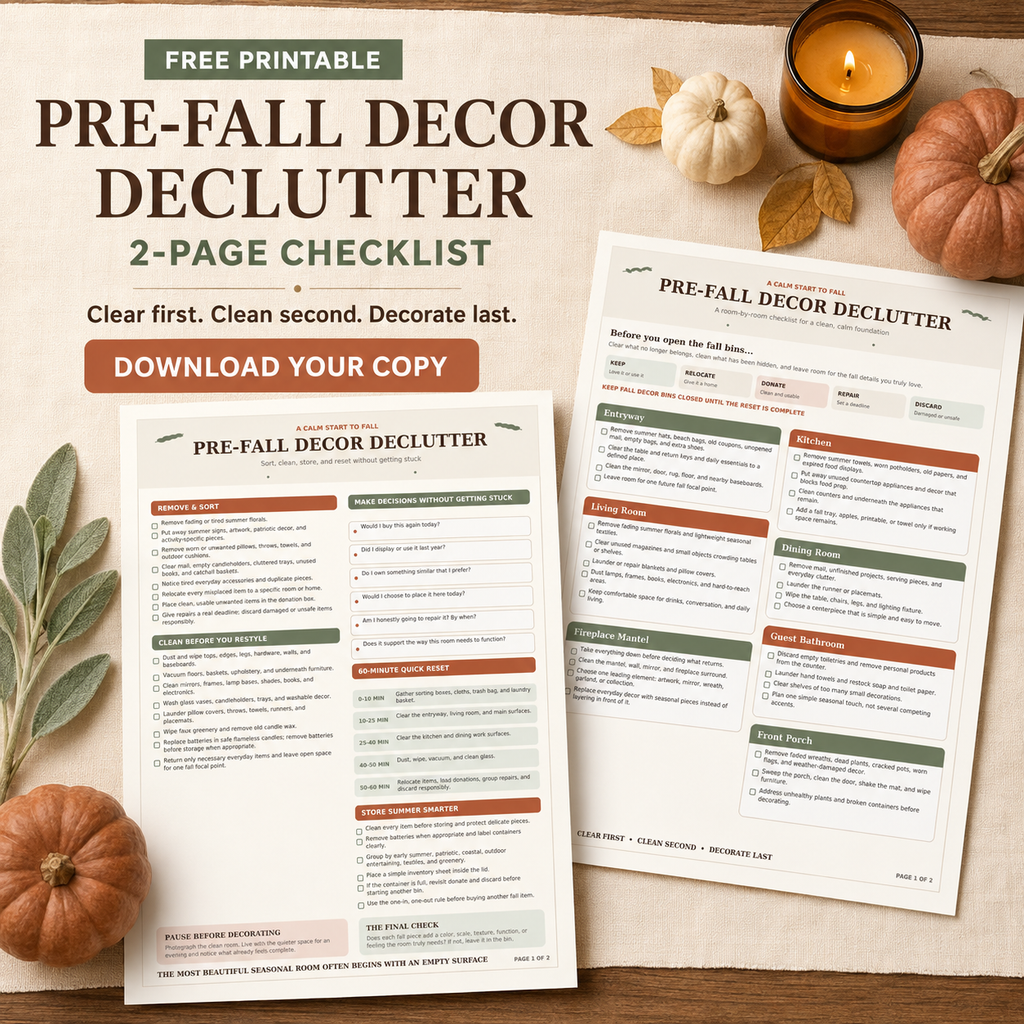
Ready to create a calmer, cleaner foundation for fall? Grab the free Pre-Fall Decor Declutter Checklist and work through your home one manageable space at a time. This two-page printable includes room-by-room tasks, simple sorting categories, helpful decision prompts, cleaning reminders, smart summer-storage tips, and a 60-minute quick reset for busy days. Print your copy, check off each task, and enjoy the peaceful feeling of a freshly cleared home before you open a single fall decor bin!
Discover more from True Whimsy
Subscribe to get the latest posts sent to your email.

 What Bestselling Etsy Listings ACTUALLY Have in Common
Leave a Reply